
Build towards a final performance
Updates, clarification, reasoning, diplomatic challenge and coordination accumulate across the course. Decision Room requires learners to retrieve and combine them.
Built for You
A short, in-company corporate-English course that builds towards Decision Room: a cross-functional capstone requiring learners to consult, negotiate and commit to next steps.
Six-session course architecture, with developed Session 1 and capstone materials plus selected supporting packs.
Delivery: Face-to-face, in-company workshops · 6 × 90 minutes
B1+/B2 · 6 × 90 minutes · 9 hours
An original Content Studio demonstration based on an invented commission. It contains no client-owned material and is not presented as a delivered client project.
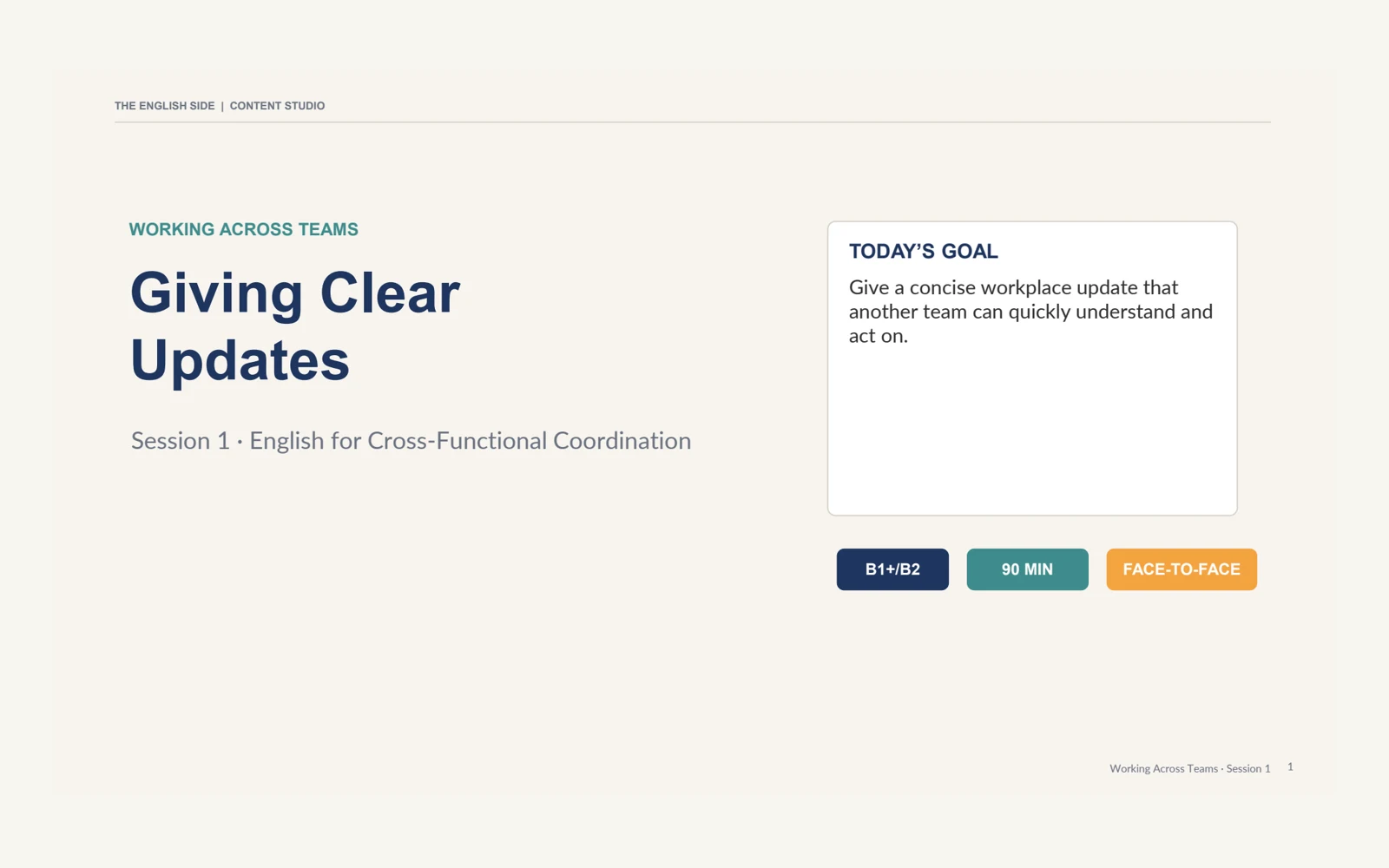
Professionals can describe their own work, but coordination becomes harder when information is incomplete, constraints compete and discussion must lead to action. The sample brief calls for a practical B1+/B2 English course with systematic language development, realistic face-to-face interaction and evidence of increasing independence.
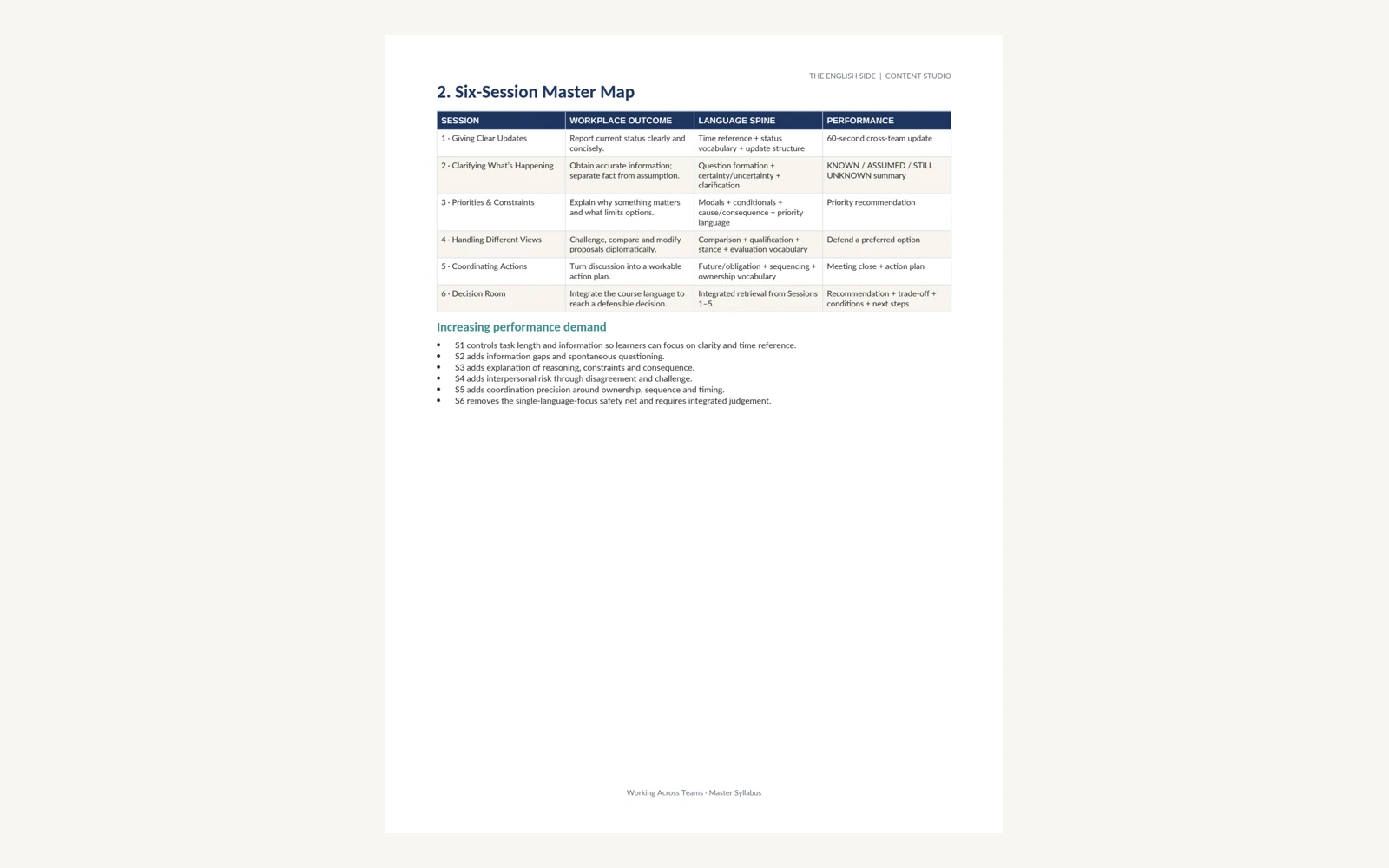
The master syllabus links workplace outcomes, language, recycling and performance evidence across all six sessions. The progression is Update → Clarify → Explain → Challenge → Coordinate → Decide.
Move from concise updates to verified information and explicit constraints.
Compare perspectives, coordinate action and defend a decision.
Decision Room places learners 12 working days before a fictional Peak Week. Three initiatives compete for one substantial release slot: a Customer Delivery Update, an Exception Handling Workflow and a Campaign Feature.
Reactivate course language, then examine information from Customer & Commercial, Operations, Technology or People & Implementation.
Each learner consults at least two other perspectives and checks assumptions. No single group holds enough information.
Mixed teams agree what to proceed with, phase or delay, explain the trade-off and record owners, timings and conditions.
A new constraint tests whether learners can reopen the relevant part of the decision and communicate a precise revision.
The facilitator uses observed communication evidence for feedback; learners identify a behaviour to carry into workplace meetings.
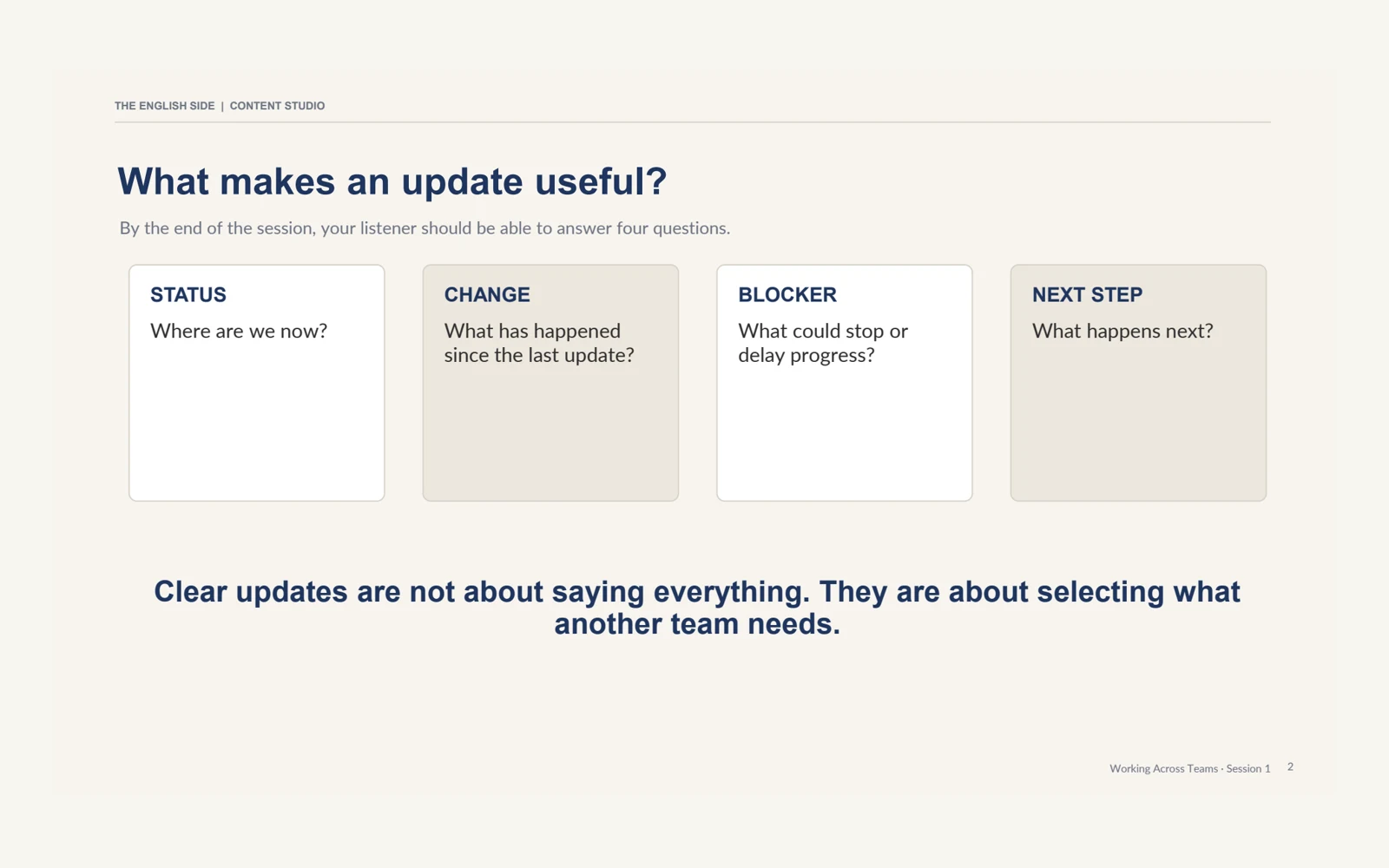
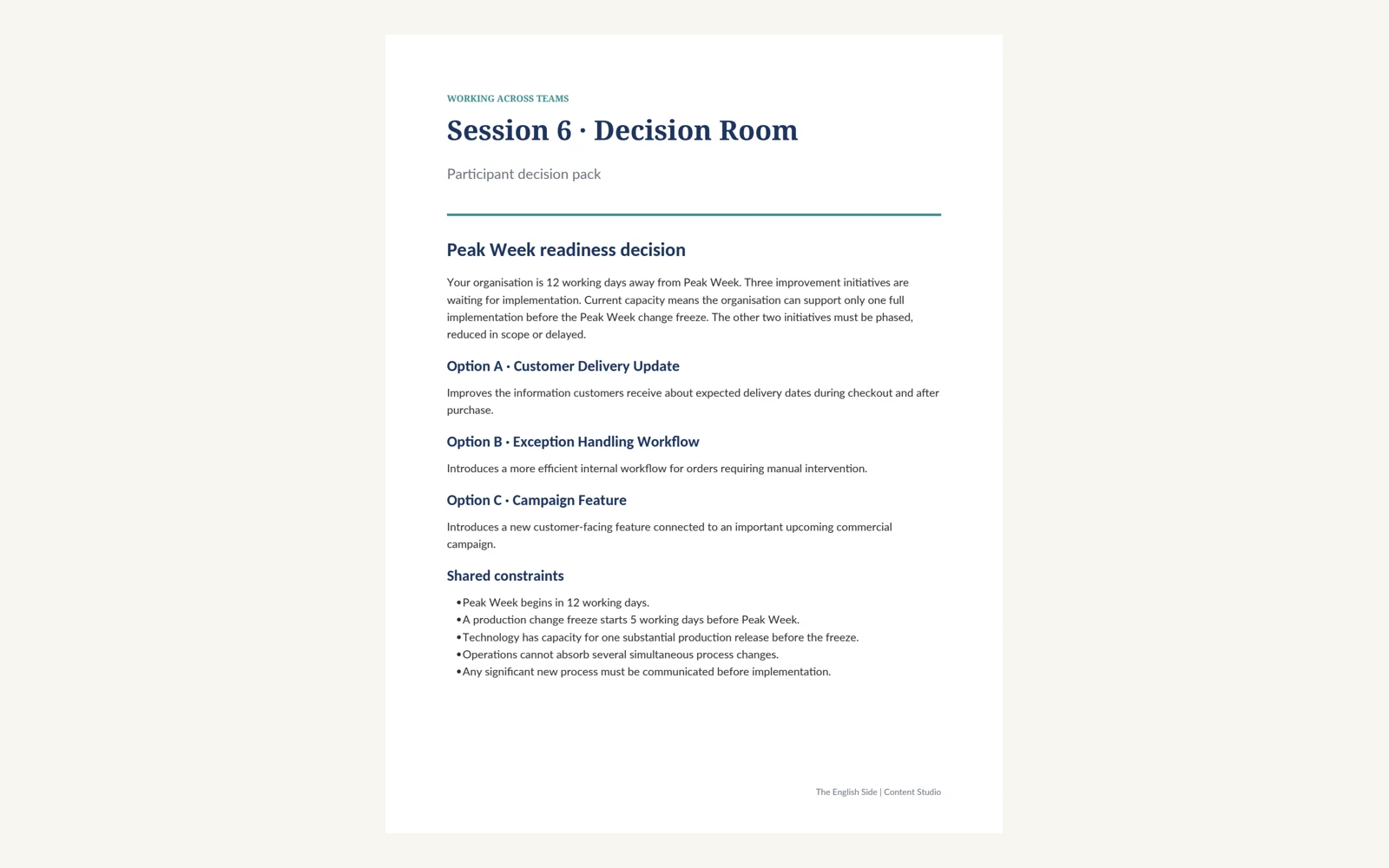
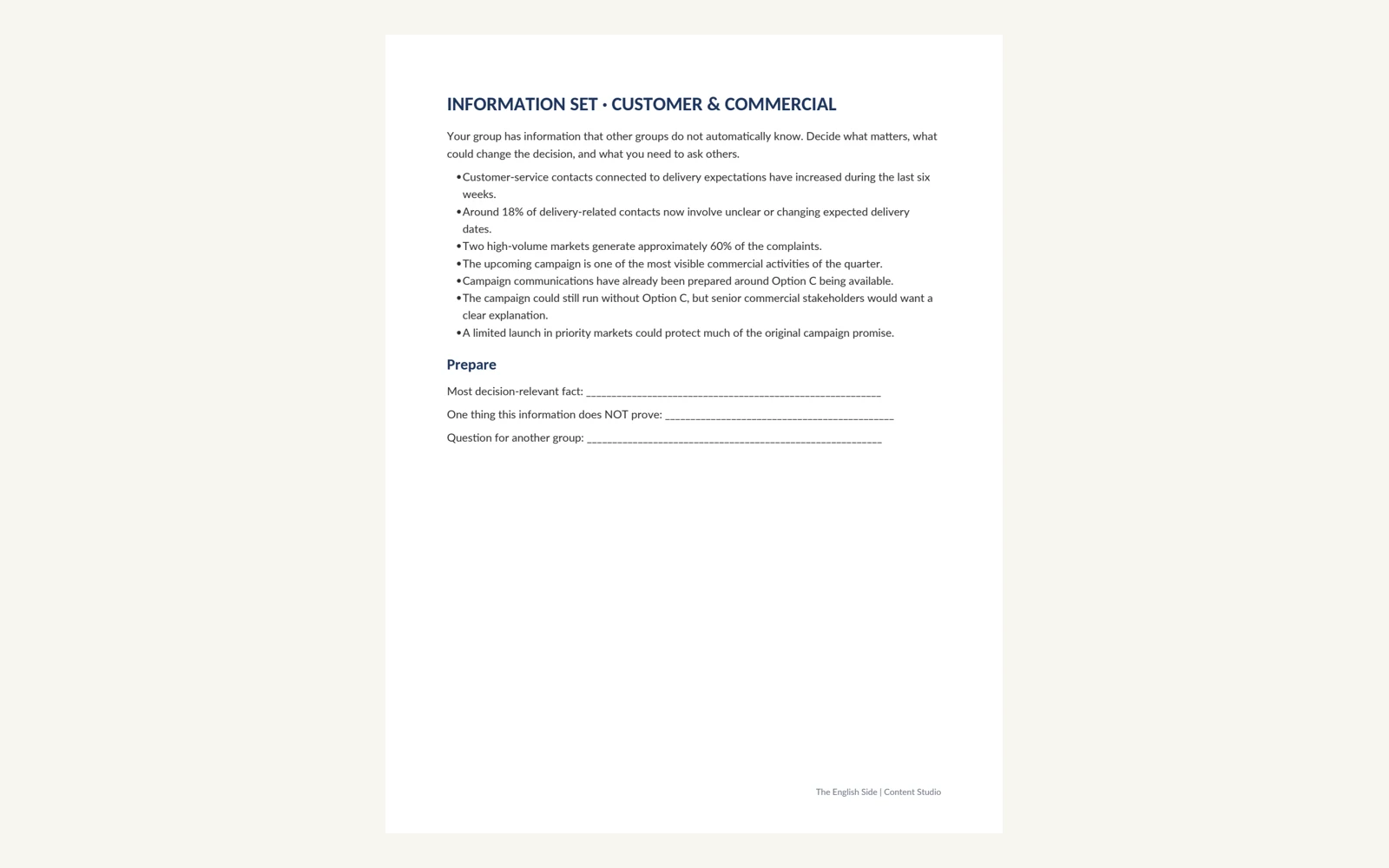
Design, learner materials and trainer guidance support the same performance goals.
The capstone retrieves what the course has developed.
Language from earlier sessions returns under greater information and interaction demands. Decision Room is the final course performance, not a separate product offer.
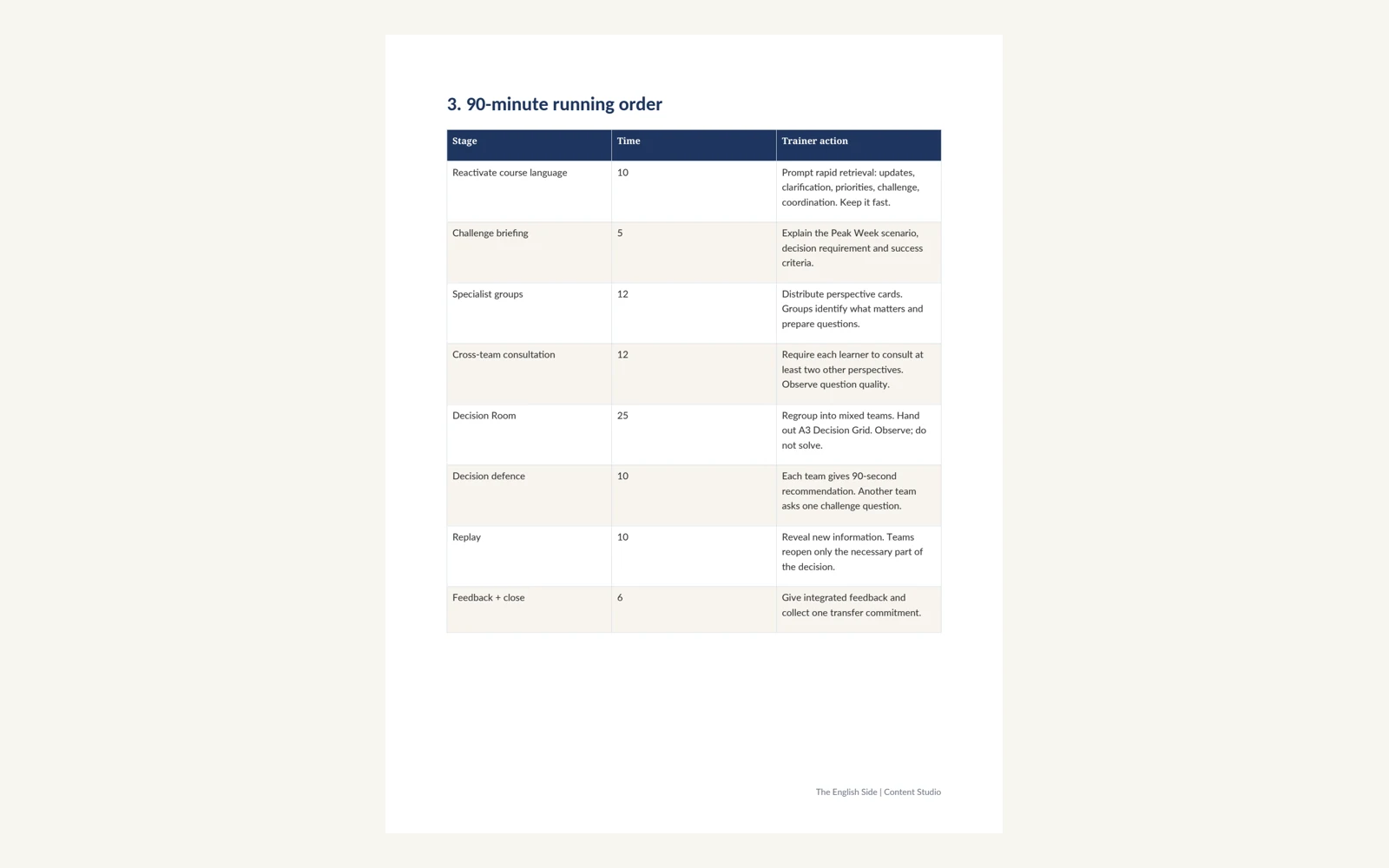
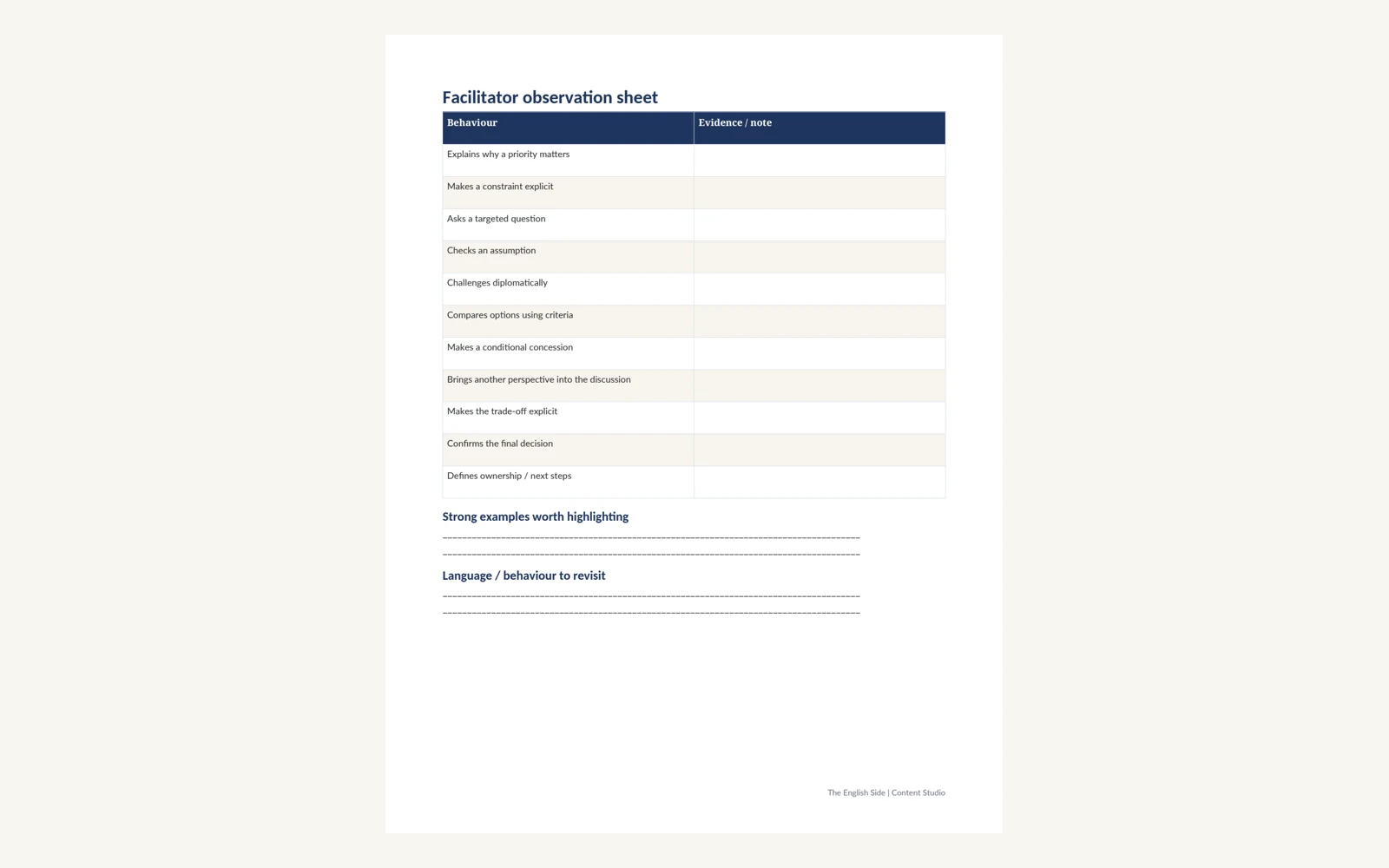
This portfolio set combines course-level design, developed delivery materials and production specifications. Sessions 3 and 4 are represented by specifications, not complete delivery packs. Selected page previews are shown here; the full source files are not published.
Discuss the learners, delivery context and workplace performance you need the materials to support.
Discuss a Studio project